
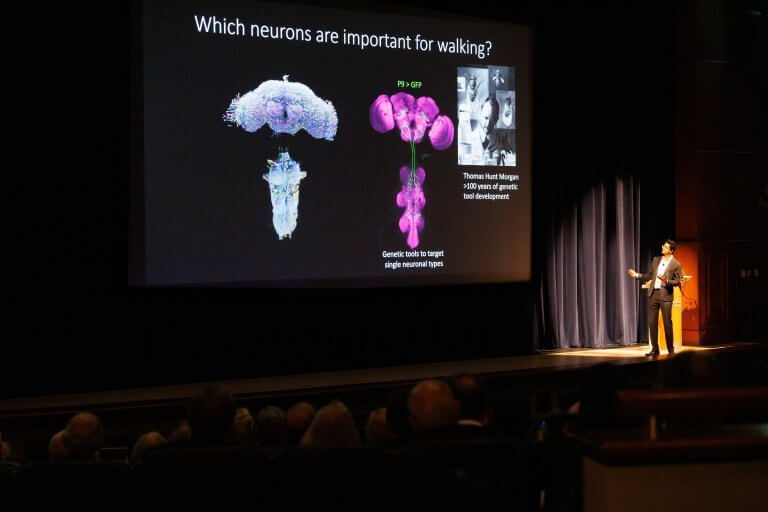
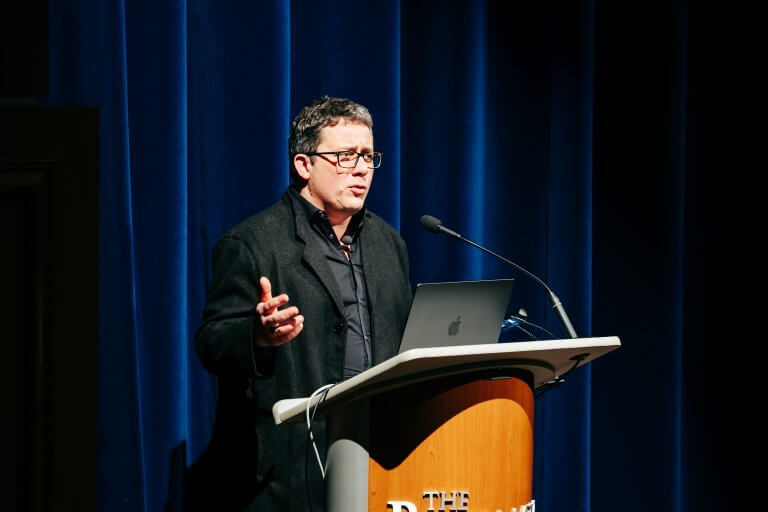
On March 19, 2025, at The Benjamin Upper School guests gathered for the final installment of this year’s Science Meets Music, an evening that seamlessly blends scientific discovery with live chamber music.
Dr. Salil Bidaye of the Max Planck Florida Institute for Neuroscience (MPFI) delivered a fascinating talk on one of life’s most integral questions: How do we move? Not the flips of gymnasts or the leaps of dancers—but the everyday acts of walking, turning, and keeping our balance.
Dr. Bidaye’s lab is answering that question in an unexpected way – by studying the fruit fly. Despite its size, the fruit fly shares many neural similarities with humans. In fact, almost 75% of disease-causing genes found in humans have counterparts in the fruit fly, making it an ideal organism to study. Thanks to over a century of genetic tools, researchers can manipulate fly neurons with remarkable precision, offering insights into the basic mechanisms of movement that no robot has yet mastered.
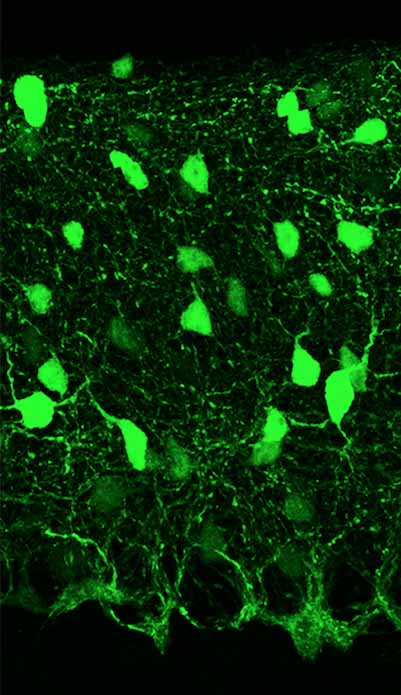
In collaboration with research groups around the world, Dr. Bidaye’s team helped produce the most complete brain wiring diagram to date—mapping the entire fly brain at synaptic resolution. This resource has helped his lab identify key neurons, like the “P9” and “Bolt” cells, that act as “neural puppet masters” that control movement with elegant precision.
By decoding how motion is generated and stopped at the cellular level, MPFI researchers are building the groundwork for better understanding movement disorders and neurological diseases in humans.
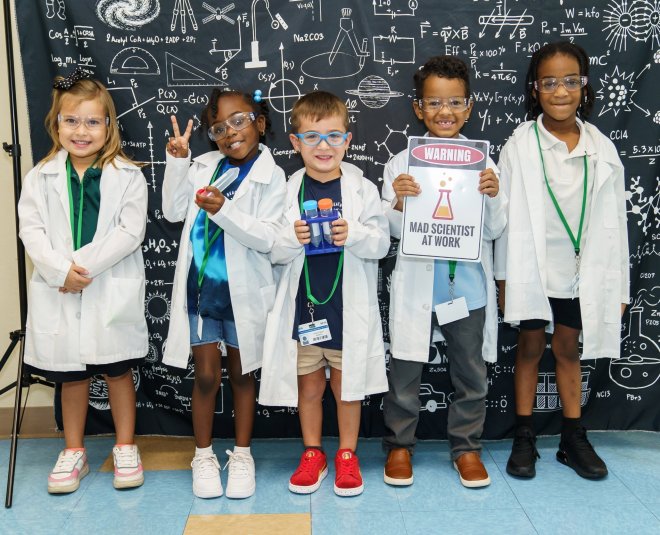
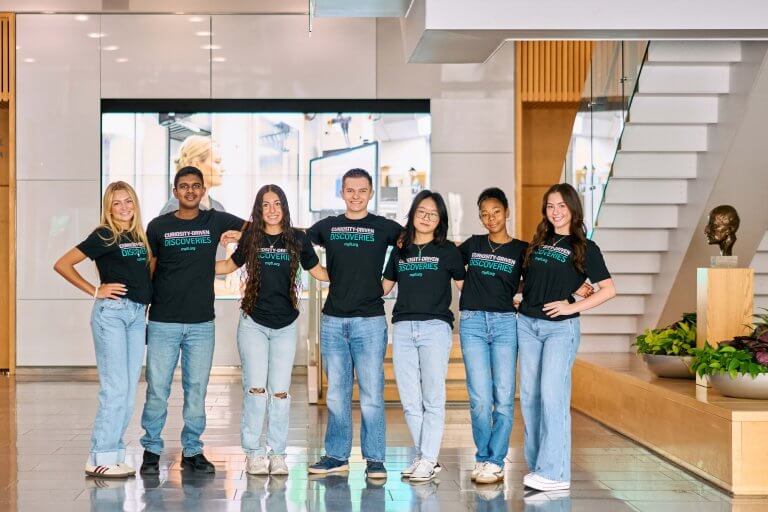
And their work doesn’t stop in the lab. Programs like Ask Max and Brain Exploration Day are bringing science into local schools and communities—sparking curiosity and opening minds. One student wrote after a classroom visit, “I wish you were here longer to share everything you knew.” It’s this kind of impact that underscores the value of sharing science widely—and engaging the next generation of thinkers.
Dr. Bidaye shared that if it seems like he and his lab are having a lot of fun with their work it’s because they truly are. “Most of the breakthroughs that happen in science, everything from the discovery of calculus to the invention of antibiotics can be traced back to having fun and playing around. And that’s why “curiosity-driven research,” which is the motto of the Max Planck Society, is so important.
The evening also featured captivating performances by musicians from the Chamber Music Society of the Palm Beaches. Violinist Chad Hoopes and violist Laura Liu opened the night with Mozart’s String Duo No. 1 in G Major, K. 423. Later, they were joined by violinist Anna Lee and cellist Sara Scanlon for a stirring rendition of Dvořák’s String Quartet No. 12 in F Major, Op. 96 “American.” Watch a video of the event.
The Science Meets Music series is proudly underwritten by Ambassador David and Mrs. Jennifer Fischer, whose continued support helps MPFI connect science and the arts in meaningful, memorable ways.
Your support makes this possible. From decoding the brain to inspiring future scientists, MPFI is leading the way in neuroscience education and discovery—thanks to donors who believe in the power of curiosity to change lives.

Leave a Reply